Spot Counterfeit Leggings: 3 Seam Checks in 2 Minutes
Protecting your investment in high-end activewear is crucial; learn to spot counterfeit leggings quickly by examining three key seam characteristics, ensuring you always get the authentic quality you pay for.
In the booming world of fitness fashion, investing in high-end leggings promises comfort, performance, and durability. However, the market is unfortunately flooded with fakes. Learning how to spot counterfeit high-end leggings in 2 minutes using 3 seam checks is an essential skill for any savvy shopper looking to protect their investment and ensure they’re getting genuine quality.
The rising tide of counterfeit activewear
The allure of luxury activewear is undeniable. Brands like Lululemon, Athleta, and Gymshark have cultivated a reputation for innovative fabrics, ergonomic designs, and superior performance. This desirability, however, also makes them prime targets for counterfeiters. These illicit operations often produce convincing replicas that, at first glance, can fool even a discerning eye.
Counterfeit activewear isn't just a matter of intellectual property theft; it's a direct assault on consumer trust and safety. Fake leggings, for instance, often lack the technical specifications of their genuine counterparts. This means inferior moisture-wicking properties, poor compression, and a significantly shorter lifespan. More concerning, some counterfeit products may contain harmful dyes or chemicals, posing a health risk to wearers. The financial impact on consumers is also substantial; paying premium prices for substandard goods is a frustrating experience that can erode confidence in online shopping and even reputable retailers.

Understanding the subtle differences between authentic and counterfeit items requires a keen eye for detail, particularly when it comes to construction. While logos and tags can be replicated with increasing accuracy, the intricate details of garment assembly often reveal the truth. This is where focusing on seams becomes a powerful, quick, and reliable method for authentication. High-end brands invest heavily in precision manufacturing, using specific stitching techniques and quality control measures that are difficult, if not impossible, for counterfeiters to perfectly replicate without significant cost, which defeats their business model. Therefore, examining the seams allows you to cut through the superficial similarities and get to the heart of the garment's true quality and origin.
The proliferation of online marketplaces and social media selling platforms has only exacerbated the problem, making it easier for counterfeit goods to reach unsuspecting buyers globally. Without proper vigilance, consumers are left vulnerable to deceptive practices. Equipping yourself with practical knowledge, such as seam inspection techniques, empowers you to make informed purchasing decisions and avoid falling victim to these pervasive scams. This initial understanding sets the stage for a deeper dive into specific seam characteristics that serve as critical indicators of authenticity, helping you to confidently differentiate between a genuine article and a clever imitation.
The crucial role of seams in authenticating leggings
Seams are more than just functional elements that hold a garment together; in high-end activewear, they are a testament to engineering, quality, and brand integrity. Authentic leggings from reputable brands utilize specialized seam constructions designed for durability, comfort, and performance. These aren't merely decorative; they are integral to the garment's intended function, whether it's providing chafe-free movement during a rigorous workout or offering supportive compression. The type of stitch, the thread quality, and the precision of the execution all speak volumes about the manufacturer's commitment to excellence.
Counterfeiters, on the other hand, prioritize speed and cost-effectiveness. Their goal is to mimic the appearance of luxury goods without investing in the same sophisticated machinery, skilled labor, or high-quality materials. This often results in shortcuts in seam construction. While a fake might look convincing from a distance, a closer inspection of its seams will frequently reveal inconsistencies, poor tension, cheap thread, and a general lack of precision that are tell-tale signs of a counterfeit product. These manufacturing compromises are often the most difficult aspects for counterfeiters to replicate perfectly, making them invaluable indicators for consumers.
Why seam quality matters for performance
- Durability: Strong, well-constructed seams prevent rips and tears, extending the life of your leggings.
- Comfort: Flatlock seams, common in high-end activewear, minimize chafing and irritation, enhancing comfort during movement.
- Flexibility: Engineered seams allow for maximum stretch and recovery, supporting dynamic movements without restriction.
- Compression: Proper seam placement and tension contribute to the garment's ability to provide targeted compression, aiding muscle support.
The attention to detail in seam construction is a hallmark of genuine high-end leggings. Brands meticulously design their seams to withstand intense physical activity, repeated washing, and prolonged wear. This level of engineering is costly and requires specialized machinery and skilled artisans, factors that counterfeit operations typically forgo. Therefore, by understanding what constitutes a quality seam, you gain a powerful tool in your arsenal against fraudulent products. This foundational knowledge empowers you to look beyond superficial branding and assess the true craftsmanship of the garment, ensuring you invest in authentic performance wear.
Seam check 1: The flatlock stitch – a sign of authenticity
The flatlock stitch is a cornerstone of high-end activewear construction, and it’s one of the most reliable indicators of authenticity. This particular seam is designed to be completely flat against the fabric, preventing chafing and irritation during movement. Unlike traditional seams that create a ridge, flatlock stitching interlocks two pieces of fabric edge-to-edge, resulting in a smooth, low-profile join. This construction is crucial for comfort, especially in garments like leggings that are worn close to the skin during intense physical activity.
When inspecting a flatlock seam, look for uniformity and consistency. Genuine flatlock stitches will appear neat, even, and tightly woven, with no loose threads or skipped stitches. The thread itself should be robust and match the fabric's quality, often having a slight sheen. Counterfeit leggings, on the other hand, frequently feature flatlock seams that are poorly executed. You might notice uneven tension, irregular stitching patterns, or even a slight ridge where the fabric edges don't meet perfectly. The thread used in fakes is often thinner, weaker, and prone to fraying, indicating a lack of durability.
What to look for in a genuine flatlock stitch
- Smoothness: The seam should lie completely flat against the skin, both inside and out. Run your finger over it; there should be no noticeable bumps or ridges.
- Evenness: Each stitch should be uniform in size and spacing. Inconsistencies suggest rushed, low-quality manufacturing.
- Thread quality: High-end brands use strong, often specialized, threads that resist breakage and pilling. Fakes may use cheap, shiny, or brittle thread.
- Edge alignment: The two fabric edges should meet perfectly, with no gaps or overlaps.
The precision required for a true flatlock stitch is significant, demanding specialized machines and skilled operators. Counterfeiters often use simpler, less expensive machines that attempt to mimic the flatlock appearance but fail to achieve its functional benefits. This results in a seam that might look similar from a distance but feels rougher and is less durable. A quick tactile and visual inspection of the flatlock stitch can therefore provide immediate insight into the authenticity of your leggings. If the flatlock seam feels anything but perfectly smooth and appears anything less than meticulously uniform, it’s a strong red flag that you might be dealing with a fake. This immediate check can often save you from a regrettable purchase by revealing the underlying quality, or lack thereof, in moments.
Seam check 2: Overlock stitching and tension
Beyond the flatlock, overlock stitching is another critical seam type to examine, particularly on the interior of leggings. Overlock seams are commonly used to finish raw edges of fabric, preventing fraying and providing a clean, strong join. In high-end activewear, these seams are meticulously executed to ensure both durability and comfort. A genuine overlock stitch will be tight, even, and consistent, creating a secure edge that can withstand stretching and repeated wear without unraveling. The loops of the stitch should be uniform, interlocking smoothly across the fabric edge.
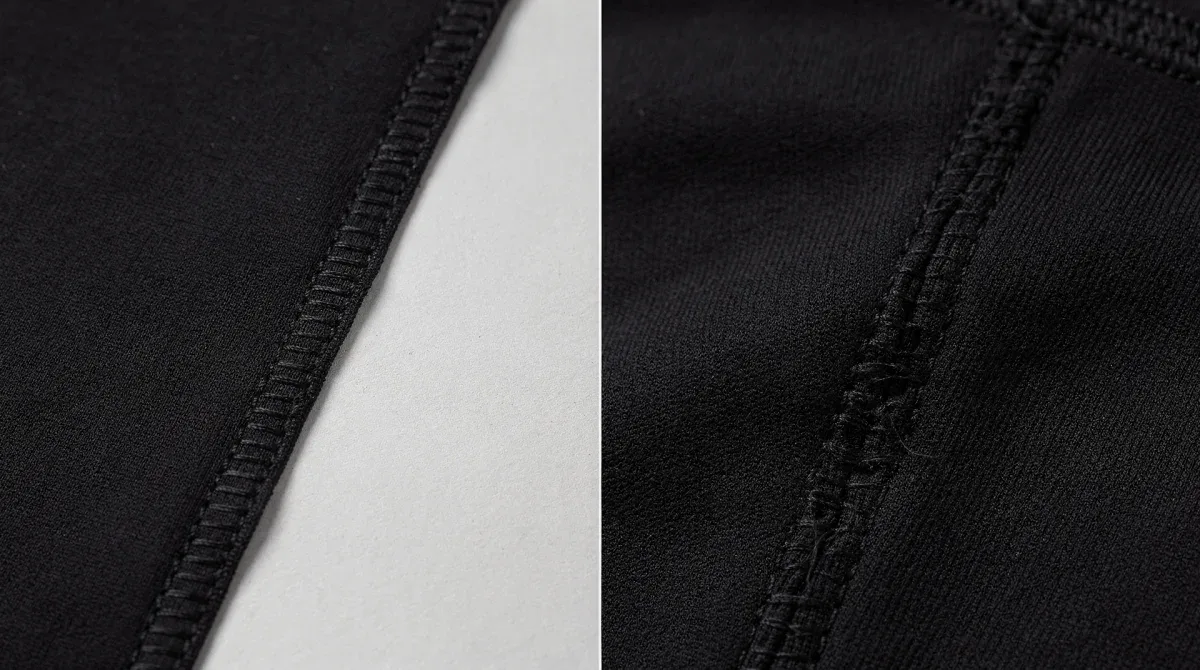
The tension of the overlock stitch is paramount. Proper tension ensures the seam lies flat without puckering or stretching the fabric unnecessarily. When the tension is correct, the seam will be flexible yet firm, allowing the garment to move with your body. Counterfeit leggings often exhibit poor overlock stitching, characterized by loose loops, uneven tension, or stitches that are too tight, causing the fabric to gather. You might see threads that are easily pulled or seams that appear flimsy, indicating a lack of structural integrity. These imperfections are difficult to hide and are a clear sign of shoddy manufacturing.
Key indicators of authentic overlock stitching
- Consistent loops: Examine the loops of the overlock stitch; they should be uniform in size and evenly spaced.
- Even tension: The seam should not pucker the fabric or appear stretched. Pull gently on the seam; it should recover smoothly without distortion.
- Thread quality and color match: The thread should be strong, not easily broken, and typically matched closely to the fabric color, unless it’s a deliberate design contrast.
- Clean finish: The edges of the fabric should be neatly trimmed before stitching, with no stray fibers protruding from the seam.
Counterfeit manufacturers often cut corners by using inferior overlock machines or inexperienced labor, leading to significant flaws in this crucial seam. A quick visual and tactile check of the overlock stitching can reveal a lot about the overall quality and authenticity of the leggings. If the overlock seams appear sloppy, inconsistent, or lack proper tension, it’s a strong indication that the product is not genuine. This check, combined with the flatlock inspection, provides a robust method for quickly assessing the legitimacy of your high-end activewear, focusing on the details that truly matter for both performance and longevity. These subtle yet significant differences are often the easiest to spot once you know what to look for, making them invaluable tools in your authentication process.
Seam check 3: Reinforcement stitches and stress points
High-end leggings are designed to withstand significant stress, particularly during workouts. This means that critical areas, such as the crotch, waistband, and ankle cuffs, often feature reinforcement stitching to enhance durability and prevent blowouts. These reinforcement stitches are not merely aesthetic; they are functional elements that absorb tension and extend the life of the garment. Common types of reinforcement include bar tacks, double stitching, or exceptionally dense overlock patterns in areas prone to high stress. These details are a hallmark of quality engineering and a strong indicator of an authentic product.
When performing this check, focus on the areas that experience the most stretching and pulling. For example, examine the point where the inner thigh seams meet at the crotch. Authentic leggings will often have a gusset, a diamond or triangular piece of fabric sewn in, reinforced with strong, even stitching. The waistband seam, where it joins the main body of the legging, should also be securely stitched, often with multiple rows of stitching or a robust overlock. Similarly, the hems at the ankles should be finished with durable, consistent stitching that won't unravel easily.
Spotting authentic reinforcement
- Bar tacks: Look for small, dense zigzag stitches at the ends of seams, particularly on pockets, belt loops (if present), or where elastic is integrated. These prevent seams from pulling apart.
- Double stitching: Many high-stress seams will have two parallel rows of stitching, offering twice the strength. Ensure both rows are even and consistent.
- Gusset quality: If the leggings have a crotch gusset, examine its attachment. The stitching should be flawless and strong, integrating seamlessly with the surrounding fabric.
- Waistband and hem integrity: These areas should feel robust and show no signs of weak or unraveling stitches.
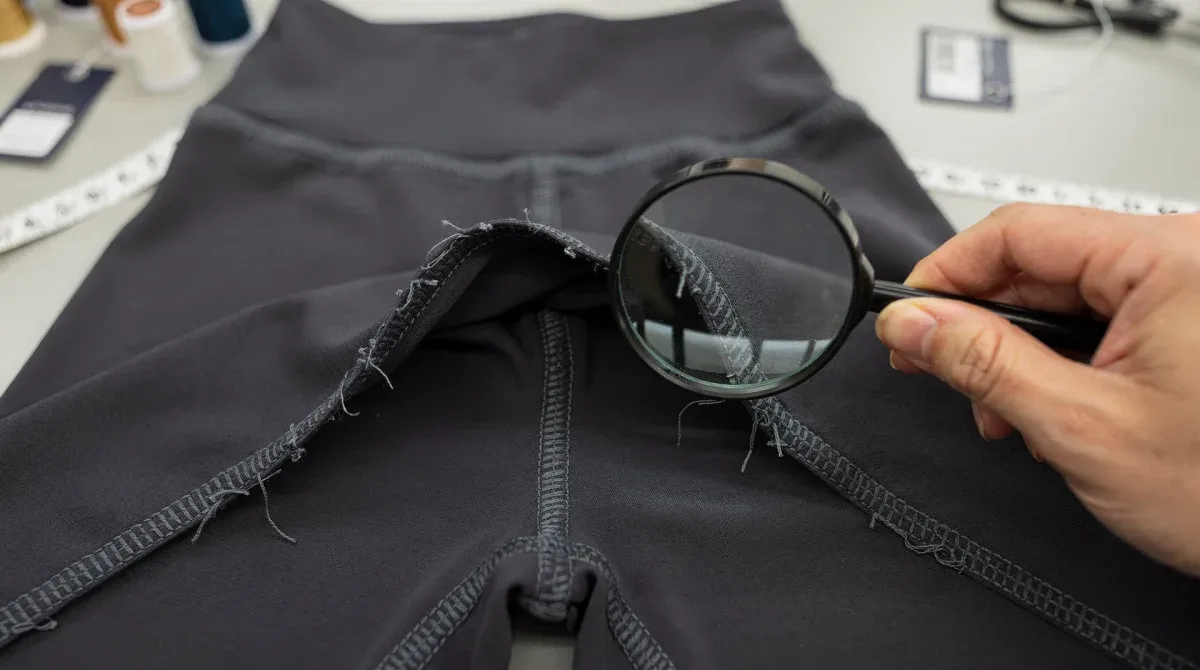
Counterfeit leggings often skimp on these critical reinforcements. You might find single stitching where double stitching is expected, or poorly executed bar tacks that are loose or easily pulled out. The gusset might be poorly sewn, or even omitted entirely, which significantly compromises comfort and durability. These omissions and shortcuts are prime indicators of a fake product. The absence of proper reinforcement means the leggings are likely to tear or unravel quickly, especially under the strain of physical activity. Therefore, a thorough inspection of these stress points offers another quick yet powerful method to determine the authenticity and overall quality of your high-end leggings, ensuring they meet the performance standards you expect.
Beyond seams: other quick authenticity checks
While seam checks are incredibly effective, combining them with other quick authentication methods can provide an even more comprehensive assessment of your leggings' legitimacy. High-end brands pay meticulous attention to every detail, from fabric quality to branding elements, and these additional factors can serve as supplementary indicators when you're trying to spot a fake. By cross-referencing multiple cues, you enhance your ability to confidently distinguish between genuine articles and their imitations, protecting your investment and ensuring you receive the quality you expect from premium activewear.
One of the most immediate checks after seams is the feel and stretch of the fabric. Authentic high-end leggings are made from specialized performance fabrics that offer specific qualities like moisture-wicking, four-way stretch, and compression. These fabrics typically have a distinct hand-feel – often smooth, soft, yet substantial. Counterfeit fabrics, on the other hand, might feel thin, overly shiny, rough, or lack the characteristic elasticity and recovery of genuine materials. Perform a gentle stretch test; genuine leggings will snap back to their original shape without bagging or distortion.
Additional authenticity markers to consider
- Logo and branding: Examine the brand logo for any irregularities. Fakes often have slightly off fonts, incorrect spacing, or poorly embroidered patches. The placement should be precise and consistent with official brand images.
- Hang tags and care labels: Authentic products feature high-quality hang tags with clear printing, correct spelling, and accurate product information. Care labels inside the garment should be neatly sewn, with legible instructions and proper material composition details.
- Zipper and hardware quality: If the leggings include zippers, drawstrings, or other hardware, check their quality. Genuine items use smooth-gliding zippers from reputable manufacturers (like YKK) and sturdy, well-finished hardware. Fakes often use cheap, flimsy, or discolored components.
- Packaging: While not always available, original packaging can offer clues. High-end brands often use branded bags or boxes with specific details and quality printing.
Remember, counterfeiters are becoming increasingly sophisticated, so relying on a single indicator might not always be enough. However, when you combine the critical seam checks with these additional visual and tactile inspections, you create a robust authentication process. If multiple red flags appear across different elements – from the feel of the fabric to the precision of the logo and the quality of the hardware – it's highly probable that you are dealing with a counterfeit product. Empowering yourself with this holistic approach ensures you can make informed decisions and avoid the disappointment of purchasing fake high-end activewear.
Protecting your investment: smart shopping strategies
Armed with the knowledge of how to spot counterfeit high-end leggings, the next step is to adopt smart shopping strategies that minimize your risk of encountering fakes in the first place. The digital marketplace, while convenient, also presents numerous avenues for counterfeit goods to proliferate. Therefore, being proactive and discerning about where and how you purchase your activewear is just as important as knowing how to inspect the garment itself. Developing a cautious approach to shopping online and in unfamiliar retail environments can significantly reduce your chances of falling victim to fraudulent sellers.
The primary rule of thumb is to always purchase directly from the brand's official website or from authorized retailers. These channels guarantee authenticity and provide recourse if there are any issues with your purchase. While third-party marketplaces can sometimes offer good deals, they also carry a higher risk of counterfeit products. If you choose to buy from such platforms, exercise extreme caution and conduct thorough due diligence on the seller. Look for clear indications of legitimacy, such as a strong track record, positive customer reviews specifically mentioning authenticity, and transparent return policies. Avoid sellers with vague descriptions, poor-quality photos, or prices that seem too good to be true, as these are often classic signs of a scam.
Key strategies for safe activewear shopping
- Buy from authorized sources: Stick to the brand's official website, flagship stores, or well-known, reputable department stores and sports retailers.
- Research third-party sellers: If buying from platforms like Amazon, eBay, or Poshmark, always check the seller's rating, reviews, and how long they've been active. Look for specific feedback regarding product authenticity.
- Be wary of significant discounts: While sales happen, unusually low prices on high-end items are a major red flag. Counterfeiters often lure buyers with steep discounts.
- Examine product listings carefully: Look for high-resolution images that show details, clear product descriptions, and consistent branding. Generic photos or vague descriptions are suspicious.
- Understand return policies: Ensure the seller offers a clear and fair return policy, especially if you have concerns about authenticity.
Ultimately, protecting your investment in high-end leggings requires a combination of vigilance and informed decision-making. By knowing what to look for in terms of seam quality and other authentication markers, and by adopting smart shopping habits, you can confidently navigate the market. Don't let the fear of fakes deter you from enjoying the benefits of premium activewear. Instead, empower yourself with knowledge and choose your purchases wisely. This proactive approach ensures that every pair of leggings you buy is a genuine article, offering the performance, comfort, and durability you expect and deserve from your fitness fashion investments.
| Seam Check | What to Look For |
|---|---|
| Flatlock Stitch | Smooth, even, no ridges. Consistent stitch size and spacing. |
| Overlock Stitch | Tight, uniform loops with even tension. No puckering or loose threads. |
| Reinforcement Stitches | Bar tacks, double stitching in high-stress areas (crotch, waistband). |
| Fabric Feel | Soft yet substantial, with strong stretch and recovery. |
Frequently asked questions about authenticating leggings
Why are seams so important for spotting fake leggings?▼Seams are crucial because high-end brands invest in specialized machinery and skilled labor for precise construction, which counterfeiters rarely replicate. The intricate details of stitch type, tension, and reinforcement are difficult to fake cost-effectively, making them reliable indicators of authenticity and quality.
Can I rely solely on seam checks to determine authenticity?▼While seam checks are highly effective, it's best to combine them with other methods. Also examine fabric quality, logo accuracy, care labels, and hardware. Multiple inconsistencies across these areas provide a stronger case for a counterfeit product, ensuring a more thorough authentication.
What if the leggings have no visible flatlock seams?▼Not all leggings use flatlock seams, though they are common in activewear. If absent, focus on the quality of overlock stitching on interior seams and any reinforcement stitches at stress points. The overall precision and robustness of all visible seams remain key indicators of genuine quality.
How quickly can I perform these seam checks?▼With a little practice, you can perform these three seam checks in under two minutes. Once you know what to look for – smooth flatlock, even overlock, and strong reinforcements – a quick visual and tactile inspection becomes second nature, allowing for rapid authentication.
Are there any brands particularly prone to counterfeits?▼Popular high-end activewear brands such as Lululemon, Athleta, and Gymshark are frequently targeted by counterfeiters due to their high demand and premium pricing. Always be extra vigilant when purchasing items from these brands, especially from unofficial resellers or discounted online stores.
Conclusion
Navigating the activewear market requires a discerning eye, especially with the prevalence of counterfeit products. By mastering the art of inspecting seams—specifically the flatlock stitch, overlock quality, and reinforcement at stress points—you gain a powerful tool to quickly and confidently identify authentic high-end leggings. These three seam checks, performed in just minutes, offer a reliable method to distinguish genuine craftsmanship from cheap imitations. Coupled with smart shopping habits, this knowledge ensures your investment in performance wear is protected, allowing you to enjoy the true quality, comfort, and durability that only authentic brands deliver. Empower yourself with these essential skills and shop with confidence, knowing you can always spot a fake.
