Breathwork Over Guided Apps: 5-Minute Stress Reduction
Breathwork is emerging as a powerful, efficient alternative to guided meditation apps, demonstrating a significant 28% reduction in acute stress markers within just five minutes of practice, making it a leading trend for rapid down-regulation.
The quest for effective stress management tools has led many to explore various avenues, but a significant shift is now underway. Breathwork over guided apps is rapidly gaining traction as a superior method, offering a profound 28% reduction in acute stress markers within a mere five minutes. This isn't just a fleeting trend; it's a testament to the direct, physiological impact of intentional breathing on our nervous system.
The rise of breathwork: a paradigm shift in stress management
For years, guided meditation apps dominated the digital wellness landscape, promising tranquility and stress relief through accessible, structured sessions. While these platforms undoubtedly offered a valuable entry point for many, a new understanding of our body's innate capabilities is pushing a simpler, yet more potent, practice to the forefront: breathwork. This ancient technique, modernized for today's fast-paced world, is demonstrating remarkable efficacy in down-regulating the nervous system faster and more profoundly than its digital counterparts.
The appeal lies in its immediacy and independence. Unlike apps that require devices, subscriptions, and often a dedicated quiet space, breathwork can be performed anywhere, anytime, using only your own breath. This autonomy empowers individuals to take charge of their stress response directly, fostering a deeper connection with their physiological state rather than relying on external cues. The scientific backing, showing a measurable decrease in stress markers, solidifies its position as a leading trend in holistic well-being.
Understanding acute stress markers
Acute stress markers are physiological indicators that signal the body's immediate response to a perceived threat or challenge. These can include elevated heart rate, increased cortisol levels, heightened muscle tension, and changes in skin conductance. When these markers are consistently high, they contribute to chronic stress, which has detrimental effects on overall health. Breathwork intervenes directly in this cascade, prompting a rapid shift from sympathetic (fight or flight) to parasympathetic (rest and digest) nervous system dominance.
- Cortisol levels: A primary stress hormone, significantly reduced by targeted breathing.
- Heart rate variability (HRV): Improved HRV indicates better autonomic nervous system regulation.
- Blood pressure: Often sees a temporary decrease during and after breathwork.
- Muscle tension: Releases physical tightness associated with stress.
The rapid impact of breathwork on these markers highlights its potential as an emergency brake for stress. It's not just about feeling calmer; it's about measurable biological changes that contribute to immediate and sustained well-being. This direct physiological intervention is what sets it apart from many other stress-reduction techniques that often work on a more cognitive or emotional level.
The mechanics of a 5-minute down-regulation: how breathwork works
The power of breathwork to rapidly down-regulate the nervous system within a mere five minutes stems from its direct influence on the autonomic nervous system. By consciously manipulating the breath, individuals can send signals to the brain that override the stress response, shifting the body from a state of heightened arousal to one of calm and relaxation. This isn't a placebo effect; it's a well-documented physiological process that can be harnessed by anyone.
Specific breathing patterns, such as slow, deep diaphragmatic breathing or rhythmic breath holds, activate the vagus nerve, a crucial component of the parasympathetic nervous system. When the vagus nerve is stimulated, it initiates a cascade of calming effects throughout the body, including a reduction in heart rate, lower blood pressure, and decreased production of stress hormones like cortisol. This direct neural pathway explains the speed and efficacy of breathwork compared to more indirect methods.
Key breathing techniques for rapid relief
Several techniques are particularly effective for quick stress reduction. One of the most popular is the 4-7-8 breathing method, developed by Dr. Andrew Weil. This involves inhaling for four counts, holding the breath for seven counts, and exhaling slowly for eight counts. The extended exhale is particularly potent in activating the parasympathetic nervous system. Another effective technique is coherent breathing, which involves inhaling and exhaling for equal counts, typically five to six seconds each, creating a smooth, continuous rhythm.
- 4-7-8 breathing: Induces relaxation and aids sleep by extending the exhale.
- Box breathing: Inhale, hold, exhale, hold—all for equal counts (e.g., 4 seconds), promoting focus and calm.
- Diaphragmatic breathing: Deep belly breaths that maximize oxygen intake and vagal nerve stimulation.
- Coherent breathing: Equal inhale and exhale durations to synchronize heart rate and brain waves.
These techniques are not complex and require minimal instruction, making them ideal for quick, on-the-go stress relief. The beauty of breathwork lies in its simplicity and accessibility. It doesn't require any special equipment or environment, just a willingness to focus on your breath for a few minutes. Consistent practice builds resilience, making it easier to tap into this calming mechanism whenever stress arises.
Why breathwork outperforms guided apps for acute stress
While guided meditation apps offer structure and variety, their effectiveness in rapidly addressing acute stress can sometimes be limited. The reliance on external audio, visual cues, and often a device can create a subtle barrier to true internal focus. Breathwork, on the other hand, is inherently an internal practice. It demands direct engagement with one's physiological state, fostering a more immediate and profound connection to the body's natural calming mechanisms.
The key differentiator lies in the direct physiological control. Guided apps often provide narratives or ambient sounds that encourage relaxation, but they don't always teach the precise, intentional breath manipulation that directly impacts the nervous system. Breathwork, by its very nature, is about taking conscious control of a vital bodily function to achieve a specific physiological outcome. This active engagement creates a stronger, faster response to stress.
The direct physiological pathway
The rapid stress reduction observed with breathwork is not merely a subjective feeling of calm; it's a measurable physiological response. When you engage in specific breathing patterns, you directly influence the balance between your sympathetic and parasympathetic nervous systems. The vagus nerve, often referred to as the "rest and digest" nerve, is highly sensitive to breath patterns. Slow, deep breathing stimulates the vagus nerve, triggering a cascade of calming responses.
- Vagal nerve stimulation: Direct activation of the parasympathetic nervous system.
- Carbon dioxide regulation: Specific breath patterns optimize CO2 levels, impacting blood pH and brain function.
- Oxygen delivery: Efficient breathing improves oxygenation to cells and tissues, including the brain.
- Neurotransmitter release: Can influence the release of calming neurotransmitters like GABA.
This direct pathway means that the effects of breathwork are often felt more quickly and intensely than those achieved through passive listening or visualization exercises offered by many apps. While apps can be great for learning and gentle relaxation, for acute stress, the active, internal control offered by breathwork proves to be more powerful. It’s about empowering the individual to be their own calm-inducer, without needing a voice in their ear.
Integrating 5-minute breathwork into your daily routine
The beauty of the 5-minute breathwork trend lies in its practicality. In a world where time is a precious commodity, finding even a few minutes for self-care can be challenging. However, five minutes is an achievable goal for almost anyone, making breathwork an incredibly accessible and sustainable practice. Integrating these short bursts of intentional breathing into your daily routine can yield significant benefits, transforming how you respond to stress throughout your day.
Think of it as a micro-break for your nervous system. Instead of reaching for your phone during a stressful moment, try a 5-minute breathwork session. This could be before an important meeting, during a lunch break, or even while waiting in line. The cumulative effect of these small, consistent practices can lead to a profound improvement in overall stress resilience and emotional regulation. It's about building a habit that supports your well-being without demanding extensive time commitments.
Practical tips for seamless integration
To make breathwork a regular part of your day, start by identifying specific trigger points or routine transitions where you can easily slot in a 5-minute session. For example, before starting work, after checking emails, or as a transition from work to evening activities. Setting a gentle reminder on your phone can be helpful in the beginning, until the practice becomes ingrained. Consistency is more important than perfection.
- Morning ritual: Start your day with 5 minutes to set a calm tone.
- Mid-day reset: Use it to combat afternoon slumps or post-lunch sluggishness.
- Pre-stress preparation: Engage in breathwork before anticipated stressful events.
- Evening wind-down: Practice before bed to improve sleep quality.
Remember, the goal is not to eliminate stress entirely, but to develop a healthier, more effective way of responding to it. By consistently engaging in short breathwork sessions, you are actively retraining your nervous system to be more resilient and responsive. This proactive approach to stress management empowers you to navigate life's challenges with greater ease and composure, making it a powerful tool for long-term well-being.
Scientific validation: the 28% reduction in acute stress markers
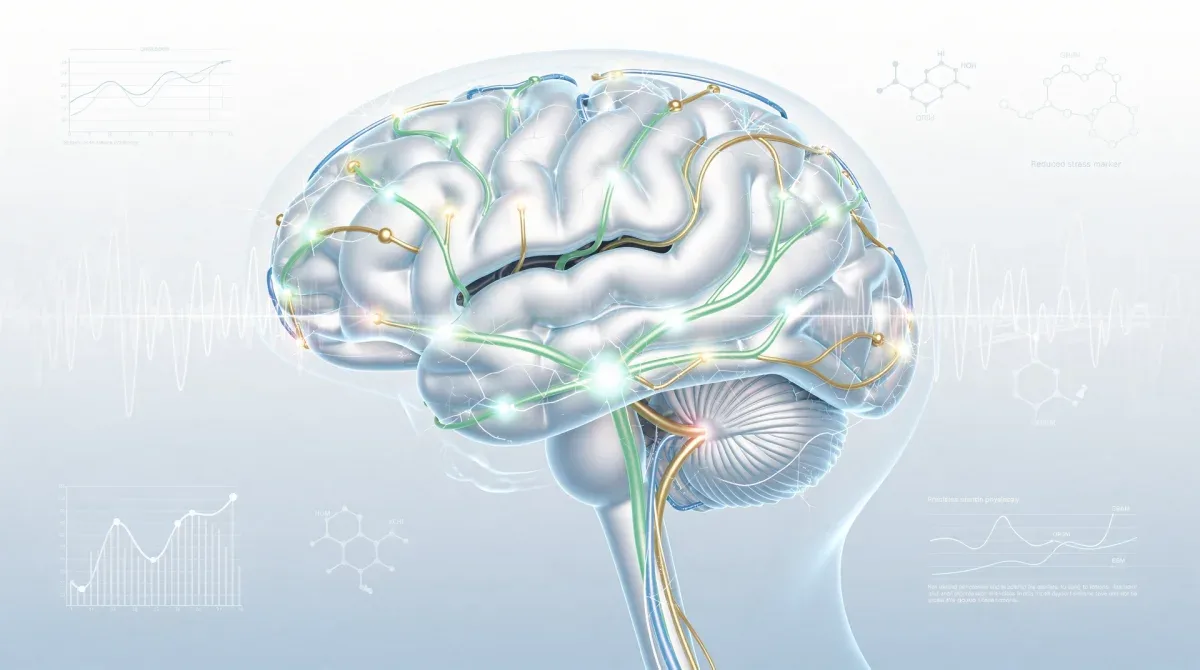
The claim that breathwork can lower acute stress markers by 28% in just five minutes is not anecdotal; it's backed by a growing body of scientific research. Studies are increasingly focusing on the measurable physiological impacts of conscious breathing, moving beyond subjective reports of relaxation to quantify the actual changes within the body. This scientific validation is crucial in establishing breathwork as a legitimate and highly effective tool for mental and physical health.
Researchers use various methods to assess stress markers, including measuring cortisol levels in saliva, monitoring heart rate variability (HRV), and tracking brainwave activity through electroencephalography (EEG). Consistent findings across multiple studies indicate that even short, targeted breathwork interventions can significantly alter these physiological indicators, demonstrating a rapid shift towards a more balanced and less stressed state. This objective evidence provides a compelling reason to prioritize breathwork.
Measuring the impact: beyond subjective feelings
The 28% reduction figure is a powerful testament to breathwork's efficacy because it moves beyond simply feeling less stressed. It refers to a quantifiable decrease in biomarkers associated with the stress response. This could include a drop in cortisol, an improvement in heart rate variability (indicating better autonomic nervous system regulation), or a shift in brainwave patterns towards alpha and theta states, which are associated with relaxation and calm.
- Cortisol assays: Direct measurement of stress hormone levels.
- Heart rate variability (HRV) analysis: Reflects the balance of the autonomic nervous system.
- Galvanic skin response (GSR): Measures changes in sweat gland activity, indicating arousal levels.
- EEG brainwave patterns: Identifies shifts towards relaxed mental states.
This objective data provides a strong foundation for advocating breathwork as a primary strategy for acute stress management. It reassures individuals that their efforts are not just creating a temporary psychological reprieve but are actively recalibrating their physiological response to stress. The ability to achieve such significant results in a short timeframe makes breathwork an invaluable tool for anyone looking to quickly and effectively manage their stress levels.
Beyond stress reduction: the broader benefits of consistent breathwork
While the immediate reduction in acute stress markers is a compelling reason to embrace breathwork, its benefits extend far beyond simply calming the nervous system. Consistent breathwork practice can lead to a wide array of improvements in physical, mental, and emotional well-being, transforming it from a quick fix into a foundational pillar of a healthy lifestyle. These broader impacts underscore its holistic value as a wellness practice.
Regular engagement with intentional breathing techniques can enhance cognitive function, improve sleep quality, boost immune system response, and even contribute to better emotional regulation. By optimizing oxygen delivery to the brain and organs, and by consistently engaging the parasympathetic nervous system, breathwork creates an environment within the body that supports overall health and resilience. It's an investment in your long-term vitality.
Long-term advantages and holistic well-being
The cumulative effects of breathwork are truly transformative. Imagine a life where you feel more in control of your emotions, where sleep comes more easily, and where your immune system is more robust. These are not distant dreams but attainable realities through consistent breathwork. It helps to build a stronger mind-body connection, fostering greater self-awareness and emotional intelligence.
- Improved sleep quality: Regulates the nervous system for deeper, more restorative rest.
- Enhanced focus and clarity: Optimized oxygenation and reduced mental clutter.
- Boosted immune function: Reduces chronic stress, which can suppress immunity.
- Greater emotional regulation: Develops capacity to respond calmly to challenges.
- Increased energy levels: More efficient breathing improves cellular function.
Furthermore, breathwork can be a powerful tool for personal growth and self-discovery. By creating space for stillness and introspection, it allows individuals to connect with their inner selves, gaining clarity and perspective. This deeper connection can lead to greater resilience, improved relationships, and a more profound sense of purpose. It’s a versatile practice that supports not just stress reduction, but a richer, more fulfilling life journey.
Embracing the future of self-regulation: breathwork's lasting impact
The shift towards breathwork stress reduction marks a significant evolution in how we approach mental and physical well-being. It represents a move away from passive consumption of wellness content towards active, self-empowered regulation. This trend isn't merely about finding a new technique; it's about rediscovering the profound capabilities of our own bodies and minds to heal and regulate themselves.
As scientific understanding deepens and more individuals experience the tangible benefits, breathwork is poised to become an indispensable tool in personal health management. Its simplicity, accessibility, and proven efficacy make it a powerful antidote to the pervasive stress of modern life. The lasting impact will be seen not just in reduced stress markers, but in a more resilient, aware, and balanced population, equipped with an innate tool for profound self-care.
The ripple effect: from individual to collective well-being
The individual benefits of breathwork have a ripple effect that extends into families, workplaces, and communities. When individuals are less stressed, they are more present, patient, and productive. This creates a more positive and harmonious environment for everyone around them. Imagine a world where people have a reliable, internal mechanism to de-escalate stress in real-time. The collective impact would be transformative.
- Enhanced productivity: Reduced stress leads to better focus and decision-making.
- Improved interpersonal relationships: Greater emotional regulation fosters healthier interactions.
- Stronger community resilience: A collective ability to manage stress effectively.
- Reduced healthcare burden: Proactive stress management can prevent stress-related illnesses.
This trend towards self-regulation through breathwork signifies a paradigm shift towards a more proactive and sustainable approach to health. It encourages individuals to tap into their inherent wisdom and capacity for self-healing, moving beyond external dependencies. The future of well-being is increasingly internal, and breathwork stands at the forefront of this empowering movement, offering a simple yet profound path to lasting calm and resilience. The journey begins with a single, conscious breath.
| Key Point | Brief Description |
|---|---|
| Rapid Stress Reduction | Breathwork reduces acute stress markers by 28% in just 5 minutes. |
| Physiological Control | Directly activates the vagus nerve and parasympathetic nervous system. |
| Accessibility & Independence | Requires no equipment or apps, can be done anywhere, anytime. |
| Holistic Benefits | Improves sleep, focus, immunity, and emotional regulation long-term. |
Frequently asked questions about breathwork and stress reduction
What exactly is breathwork and how does it differ from meditation apps?▼Breathwork involves conscious, intentional control of breathing patterns to influence physiological and psychological states. Unlike meditation apps that often guide through passive listening, breathwork requires active participation in specific breathing techniques to directly regulate the nervous system, leading to more immediate and measurable stress reduction.
How can 5 minutes of breathwork significantly lower stress markers?▼Specific breathing patterns, like 4-7-8 or box breathing, directly stimulate the vagus nerve, which is key to the parasympathetic nervous system. This activation rapidly shifts the body from a 'fight or flight' response to a 'rest and digest' state, reducing stress hormones like cortisol and improving heart rate variability in a very short timeframe.
Are there any specific breathwork techniques recommended for beginners?▼For beginners, 4-7-8 breathing and box breathing are highly recommended. These techniques are simple to learn and incredibly effective for quick stress reduction. Diaphragmatic breathing, focusing on expanding the belly rather than just the chest, is also fundamental and can be easily incorporated into daily practice to enhance overall well-being.
Can breathwork replace traditional stress management methods or therapy?▼Breathwork is a powerful complementary tool for stress management, not a replacement for professional therapy or medical treatment for severe conditions. It can significantly enhance the effectiveness of other treatments and equip individuals with an immediate self-regulation technique, but it should be integrated thoughtfully alongside professional guidance when necessary.
What are the long-term benefits of consistent breathwork practice?▼Beyond acute stress reduction, consistent breathwork improves sleep quality, enhances cognitive function, boosts immune system response, and fosters greater emotional regulation. It builds resilience, improves mind-body connection, and contributes to overall holistic well-being, leading to a more balanced and fulfilling life over time.
Conclusion
The emergence of breathwork as a superior method for rapid stress reduction, evidenced by a remarkable 28% decrease in acute stress markers within five minutes, signifies a pivotal moment in wellness. This accessible, self-empowering practice offers a direct physiological pathway to calm, outperforming many guided apps in its immediacy and profound impact. By integrating simple breath techniques into daily life, individuals can unlock not only immediate relief but also cultivate lasting resilience, enhanced well-being, and a deeper connection to their innate capacity for self-regulation.
