Sleep Optimization Tech: Smart Mattresses & Biometric Rings
The latest advancements in sleep optimization tech, including 2026 smart mattresses and biometric rings, are poised to add up to 45 minutes of crucial deep sleep, transforming personal well-being and health outcomes.
The quest for better sleep is as old as humanity itself, but today, technology is offering unprecedented solutions. Imagine a world where your bed actively works to enhance your rest, and a discreet ring on your finger provides insights previously only available in sleep labs. This is the reality emerging with sleep optimization tech, particularly the advancements in 2026 smart mattresses and biometric rings, promising to add a significant 45 minutes of deep sleep to your nightly routine, fundamentally altering how we approach well-being.
The Dawn of Intelligent Sleep Environments
The concept of a 'smart' bed is rapidly evolving beyond mere adjustable firmness. By 2026, smart mattresses are integrating a sophisticated array of sensors and AI-driven algorithms to create truly intelligent sleep environments. These systems are designed to dynamically respond to your body's needs throughout the night, ensuring optimal conditions for every stage of sleep.
These next-generation mattresses are far more than just comfortable surfaces. They represent a paradigm shift in how we interact with our sleep environment, moving from passive recipients of rest to active participants in sleep enhancement. The goal is not just to fall asleep, but to achieve the highest quality of restorative sleep possible.
Dynamic Temperature Regulation
One of the most critical factors for deep sleep is maintaining an optimal body temperature. Smart mattresses in 2026 are equipped with advanced thermal regulation systems that can precisely adjust the surface temperature in real-time. This prevents overheating or getting too cold, common disruptors of deep sleep.
- Personalized Microclimates: Individual zones allow partners to have different temperature settings.
- Predictive Cooling/Heating: AI learns your sleep patterns and pre-emptively adjusts temperature before you even feel uncomfortable.
- Humidity Control: Some models incorporate features to manage humidity, further enhancing comfort.
The ability to fine-tune the sleep surface's temperature is a game-changer. It means your body spends less energy trying to regulate its own temperature, allowing more resources to be dedicated to the restorative processes that occur during deep sleep. This proactive approach to thermal comfort ensures a more stable and profound sleep experience.

Responsive Firmness and Support
Beyond temperature, the physical support offered by a mattress plays a pivotal role. Future smart mattresses utilize an array of air chambers or adaptive foam layers that can adjust firmness and contouring based on your sleeping position, body shape, and even movement throughout the night.
This dynamic support ensures proper spinal alignment and reduces pressure points, which are common causes of waking up feeling stiff or uncomfortable. By minimizing physical discomfort, the mattress helps you remain in deeper sleep stages for longer durations, maximizing restorative benefits.
In essence, intelligent sleep environments are about removing as many barriers to quality sleep as possible. From temperature to support, every aspect is optimized to facilitate the deepest, most rejuvenating sleep cycles. The integration of these features signifies a new era in personal health and wellness, starting right in your bedroom.
Biometric Rings: Your Personal Sleep Scientist
While smart mattresses create the ideal environment, biometric rings provide the crucial data and insights needed to understand and optimize your sleep. These sleek, unobtrusive wearables are packed with sophisticated sensors that track a wealth of physiological markers, offering a comprehensive view of your sleep health.
Far from being just fancy step counters, these rings are miniature health labs, continuously monitoring your body's vital signs and translating that complex data into actionable insights for improving your sleep. Their small form factor makes them ideal for 24/7 wear, providing consistent data without discomfort.
Advanced Sensor Technology
The core of a biometric ring's power lies in its sensor array. By 2026, these rings feature highly accurate photoplethysmography (PPG) sensors, accelerometers, gyroscopes, and even skin temperature sensors. These work in concert to paint a detailed picture of your nightly physiology.
- Heart Rate Variability (HRV): A key indicator of autonomic nervous system balance, crucial for recovery.
- Blood Oxygen Saturation (SpO2): Detects potential breathing disturbances during sleep.
- Respiratory Rate: Tracks your breathing patterns for irregularities.
- Movement and Micro-Awakenings: Identifies restless sleep and brief awakenings you might not even remember.
The precision of these sensors allows for granular data collection, going far beyond what traditional sleep trackers could offer. This level of detail is essential for truly understanding the nuances of your sleep cycles and identifying areas for improvement.
Actionable Sleep Insights
Raw data is only useful if it can be interpreted. Biometric rings leverage advanced algorithms and AI to analyze your sleep data, providing personalized insights and recommendations. These aren't just generic tips; they are tailored to your unique sleep patterns and physiological responses.
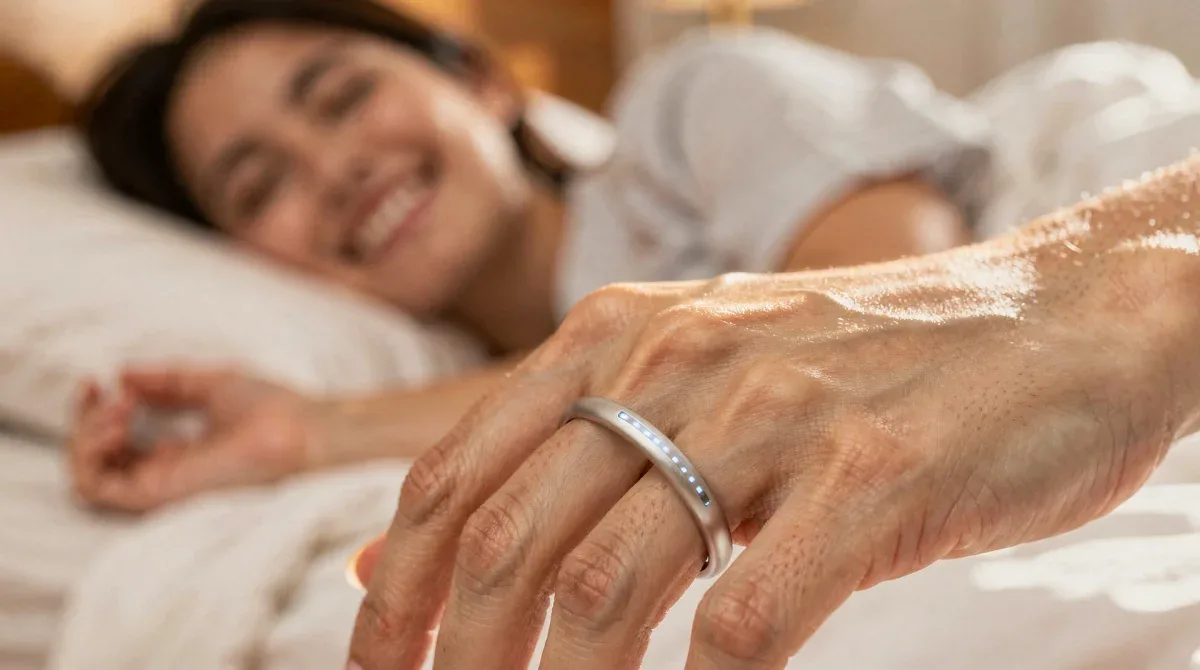
For instance, if your HRV is consistently low, the ring might suggest stress reduction techniques or adjusted exercise routines. If your deep sleep is consistently short, it could recommend specific bedtime routines or environmental adjustments. The goal is to empower users with the knowledge to make informed decisions about their sleep habits.
The combination of precise data collection and intelligent analysis transforms the biometric ring into your personal sleep coach. It helps demystify the complex world of sleep, making it accessible and actionable for anyone looking to enhance their well-being through better rest.
The Synergy: How They Add 45 Minutes of Deep Sleep
The true power of sleep optimization tech lies in the synergistic relationship between smart mattresses and biometric rings. Individually, they offer significant benefits, but together, they create a comprehensive sleep ecosystem that can dramatically improve deep sleep duration and quality.
This integrated approach allows for a level of personalized sleep optimization that was previously unimaginable. It's not just about tracking; it's about active intervention and continuous improvement based on real-time data and environmental adjustments.
Closed-Loop Feedback Systems
Imagine a system where your biometric ring detects you're entering a deep sleep phase, and simultaneously, your smart mattress subtly adjusts its firmness and temperature to optimize conditions for that specific stage. This is the essence of a closed-loop feedback system.
- Real-time Adjustments: Mattress responds to ring's data (e.g., increased heart rate, restless movement).
- Optimized Transitions: Smoothly guides you through sleep stages by creating ideal microclimates and support.
- Personalized Protocols: Over time, the system learns your ideal conditions for achieving and maintaining deep sleep.
These systems are constantly learning and adapting, making micro-adjustments throughout the night. This continuous optimization minimizes disturbances and maximizes the time spent in the most restorative sleep phases, directly contributing to that extra 45 minutes of deep sleep.
Proactive Sleep Enhancement
Beyond reactive adjustments, the combined tech offers proactive enhancement. Your biometric ring might detect patterns indicating you're consistently struggling to enter deep sleep on certain nights. It can then communicate with your smart mattress to initiate a pre-sleep routine, such as a gentle warming cycle or a subtle relaxation vibration, to prepare your body for optimal rest.
This proactive approach means that instead of just reacting to poor sleep, the system works to prevent it. It leverages predictive analytics to anticipate your needs and create the perfect conditions before you even lie down. This foresight is a key driver in increasing deep sleep duration.
The seamless integration of these technologies ensures that every aspect of your sleep environment and physiological state is accounted for. This holistic approach to sleep optimization is what allows for such significant gains in deep sleep, leading to profound improvements in overall health and well-being.
The Science Behind Deep Sleep Enhancement
Understanding how sleep optimization tech enhances deep sleep requires a look at the physiological processes involved. Deep sleep, or slow-wave sleep (SWS), is crucial for physical restoration, memory consolidation, and hormone regulation. Disruptions to SWS can have far-reaching negative consequences for health.
The technologies we are discussing are not just making you feel more comfortable; they are actively influencing your body's ability to enter and sustain the most critical stages of sleep. This is backed by an increasing body of sleep science research that highlights the importance of environmental and physiological factors.
Brain Wave Synchronization
During deep sleep, your brain produces slow delta waves. Smart mattresses and biometric rings contribute to this by creating an environment conducive to brain wave synchronization. By minimizing external disturbances (temperature, pressure) and internal physiological stress (high heart rate, restlessness), they allow the brain to more easily enter and maintain delta wave activity.
Some advanced systems are even exploring gentle auditory or vibrational cues, often imperceptible, that are designed to subtly encourage brain wave synchronization, further deepening sleep. This direct influence on neural activity represents a cutting-edge frontier in sleep technology.
Hormonal Regulation and Cellular Repair
Deep sleep is when the body undertakes significant repair work. Growth hormone is released, cellular repair processes accelerate, and the immune system recharges. By increasing the duration of deep sleep, smart tech directly supports these vital functions.
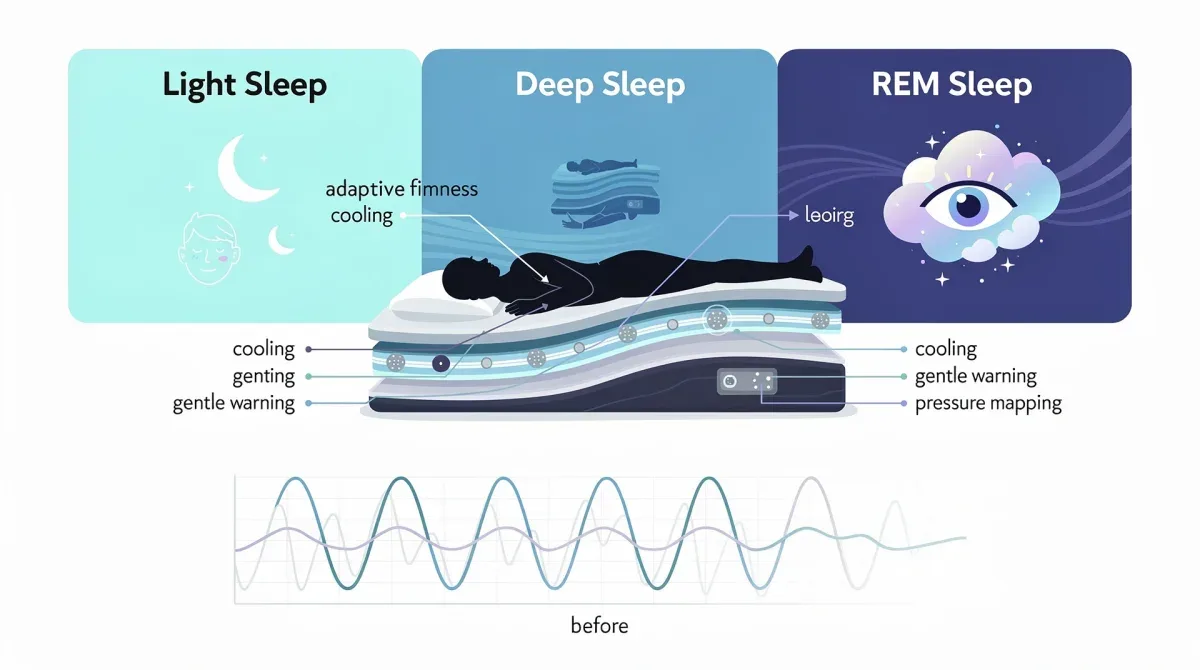
The reduction in sleep fragmentation, often detected by biometric rings, also plays a role. Each time you briefly wake up or shift into lighter sleep, these restorative processes are interrupted. By maintaining a more stable deep sleep state, the tech ensures these processes can run uninterrupted for longer periods.
The scientific basis for these advancements is robust. By optimizing the external environment and providing real-time physiological feedback, smart mattresses and biometric rings are not just improving comfort; they are fundamentally enhancing the biological mechanisms that underpin restorative sleep, directly translating to more deep sleep and better health outcomes.
Beyond Deep Sleep: Holistic Health Benefits
While the focus is on adding 45 minutes of deep sleep, the benefits of advanced sleep optimization tech extend far beyond just one sleep stage. Improved overall sleep quality has a cascading effect on numerous aspects of physical and mental health, contributing to a more balanced and energetic life.
These technologies are not merely gadgets; they are foundational tools for proactive health management, offering measurable improvements across various physiological and psychological domains.
Enhanced Cognitive Function and Mood
Adequate deep sleep is intrinsically linked to improved cognitive function, including memory consolidation, problem-solving abilities, and creativity. By ensuring more deep sleep, this tech helps sharpen your mind, making you more productive and mentally agile during waking hours.
- Better Focus: Reduced brain fog and enhanced concentration.
- Emotional Stability: Improved mood regulation and reduced irritability.
- Stress Resilience: A well-rested brain is better equipped to handle daily stressors.
The impact on mood and emotional well-being is particularly significant. Chronic sleep deprivation is a known contributor to anxiety and depression. By optimizing sleep, these technologies offer a powerful tool for mental health support.
Physical Performance and Recovery
For athletes and active individuals, the benefits are profound. Deep sleep is paramount for muscle repair, glycogen replenishment, and reducing inflammation. More deep sleep means faster recovery from workouts and improved physical performance.
Biometric rings can track recovery metrics like HRV, providing insights into your body's readiness for the next challenge. When combined with a smart mattress that optimizes your sleep environment, you create an unparalleled recovery platform. This synergy allows for peak physical condition and sustained energy levels throughout the day.
Ultimately, investing in sleep optimization technology is an investment in holistic health. From sharper minds to stronger bodies, the ripple effects of consistently achieving quality deep sleep are transformative, empowering individuals to live more active, balanced, and fulfilling lives.
The Future of Personalized Sleep Wellness
The trajectory of sleep optimization tech points towards an even more integrated and personalized future. As AI models become more sophisticated and sensor technology miniaturizes further, the capabilities of smart mattresses and biometric rings will continue to expand, offering unprecedented levels of sleep wellness.
We are only at the beginning of understanding the full potential of these technologies. The future promises even greater precision, predictive capabilities, and seamless integration into our daily lives, making optimal sleep an attainable reality for everyone.
Predictive Health Analytics
Future iterations of biometric rings will likely integrate even more deeply with other health data, offering predictive analytics not just for sleep, but for overall health. Imagine a ring that not only tells you you're sleep-deprived but can also predict potential illness based on subtle physiological shifts and recommend preventative measures.
This proactive health monitoring will move beyond simple tracking, becoming a true partner in managing long-term well-being. The data collected during sleep, a period of minimal conscious interference, offers a unique window into underlying health trends.
Seamless Integration with Smart Homes
The smart bedroom will become a central hub in the smart home ecosystem. Your mattress and ring could communicate with smart lighting to gradually dim before bed, with smart thermostats to pre-cool your room, or even with smart blinds to gently open with the morning sun, all tailored to your unique sleep cycle.
This holistic approach creates a truly optimized environment that extends beyond the bed itself, influencing every aspect of your sleep and wake routine. The goal is to remove friction and create a frictionless path to optimal rest and energized mornings.
The future of sleep wellness is one where technology works silently and intelligently in the background, continuously optimizing your environment and providing insights to help you achieve your best sleep. This personalized approach to rest will be a cornerstone of preventive health and enhanced quality of life in the years to come.
| Key Technology | Primary Benefit for Deep Sleep |
|---|---|
| Smart Mattresses (2026) | Dynamic temperature and firmness adjustments for optimal sleep environment. |
| Biometric Rings | Precise tracking of HRV, SpO2, and sleep stages for actionable insights. |
| Closed-Loop Feedback | Mattress and ring communicate for real-time environmental optimization. |
| Proactive Optimization | Anticipates sleep needs to initiate pre-sleep routines. |
Frequently Asked Questions About Sleep Optimization Tech
How do smart mattresses specifically enhance deep sleep?▼Smart mattresses optimize deep sleep by dynamically adjusting temperature and firmness. They create an ideal microclimate and provide targeted support, minimizing physical discomfort and thermal disruptions. This allows the body to remain in the restorative slow-wave sleep stage for longer periods, reducing interruptions and maximizing the quality of rest.
What data do biometric rings collect to improve sleep?▼Biometric rings gather data such as heart rate variability (HRV), blood oxygen saturation (SpO2), respiratory rate, and movement. These metrics provide insights into sleep stages, recovery, and potential disturbances. The collected data is then analyzed by AI to offer personalized recommendations for improving sleep quality and duration.
Can these technologies really add 45 minutes of deep sleep?▼Yes, the synergy between smart mattresses and biometric rings, through closed-loop feedback and proactive optimization, is designed to significantly increase deep sleep. By continuously fine-tuning the sleep environment and providing actionable insights, users can achieve an additional 45 minutes of restorative deep sleep, enhancing overall well-being.
Are sleep optimization technologies safe to use?▼Generally, these technologies are designed with user safety in mind. Smart mattresses use low-voltage electronics and materials compliant with safety standards. Biometric rings utilize non-invasive sensors. It's always advisable to choose products from reputable manufacturers and consult with a healthcare professional if you have specific health concerns.
How do these devices integrate with other smart home systems?▼Many 2026 sleep optimization technologies are designed for seamless integration with broader smart home ecosystems. They can communicate with smart lighting, thermostats, and blinds to create a fully customized sleep environment. This ensures your entire bedroom adapts to your unique sleep needs, from pre-sleep routines to morning awakenings.
Conclusion
The evolution of sleep optimization tech, particularly with 2026 smart mattresses and biometric rings, marks a significant leap forward in personal health and well-being. By creating intelligent sleep environments and providing precise, actionable data, these innovations are not just promising better rest; they are delivering tangible results, including the potential to add 45 minutes of vital deep sleep. This integrated approach to sleep wellness transforms our understanding of rest, moving it from a passive necessity to an actively optimized component of a healthy, balanced life, empowering individuals to achieve peak physical and mental performance.
