Clean Air at Home: 3 Ventilation Strategies to Cut PM70%
Implementing three key ventilation strategies can dramatically cut indoor particulate matter by 70%, ensuring a healthier home environment and significantly improving overall air quality for residents.
Achieving clean air ventilation at home is more crucial than ever, particularly with growing concerns about indoor air quality. Discover how three targeted ventilation strategies can dramatically reduce indoor particulate matter by an impressive 70%, transforming your living space into a healthier sanctuary. This guide will explore practical methods to enhance air purity and protect your family's well-being.
Understanding indoor particulate matter and its health impact
Indoor particulate matter (PM) refers to microscopic solid or liquid particles suspended in the air within your home. These particles vary in size, from coarse dust, pollen, and pet dander to fine particles from cooking, candles, fireplaces, and even outdoor pollution infiltrating indoors. The smaller the particles, the deeper they can penetrate into your respiratory system, posing significant health risks.

Exposure to high levels of particulate matter can lead to a range of health issues, from minor irritations like eye, nose, and throat discomfort to more severe conditions. Long-term exposure is linked to respiratory diseases such as asthma and bronchitis, cardiovascular problems, and even adverse impacts on cognitive function. Children, the elderly, and individuals with pre-existing respiratory or heart conditions are particularly vulnerable to these effects. Understanding the sources and impacts of PM is the first step toward creating a healthier indoor environment.
Common sources of indoor particulate matter
Many everyday activities contribute to the accumulation of particulate matter in our homes. Identifying these sources is crucial for effective mitigation.
- Cooking: Frying, broiling, and even toasting can release significant amounts of fine particulate matter, especially without proper ventilation.
- Candles and fireplaces: Burning candles, incense, or wood in a fireplace releases soot and other harmful particles into the air.
- Cleaning products: Certain sprays and cleaning solutions can emit volatile organic compounds (VOCs) and fine particles that contribute to indoor air pollution.
- Pets and dust: Pet dander, dust mites, and general household dust are common allergens and sources of larger particulate matter.
- Outdoor infiltration: Pollution from traffic, industrial activities, and wildfires can seep into homes through cracks, windows, and doors.
By recognizing these common culprits, homeowners can begin to implement targeted strategies to reduce their impact. The goal is not just to mask odors or symptoms but to actively remove or prevent the accumulation of these harmful particles. Effective ventilation plays a pivotal role in achieving this, offering a proactive approach to indoor air quality management.
Understanding the pervasive nature of indoor particulate matter and its direct link to our health underscores the urgency of adopting robust ventilation strategies. It's not merely about comfort; it's about safeguarding long-term well-being for everyone living in the home. Next, we will delve into the specific ventilation methods that can make a substantial difference.
Strategy 1: natural ventilation for passive air exchange
Natural ventilation leverages the inherent forces of wind and buoyancy (the stack effect) to move air through your home without mechanical assistance. This is one of the simplest and most cost-effective ways to improve indoor air quality, particularly for reducing particulate matter. By strategically opening windows and doors, you can create pathways for fresh outdoor air to enter and stale indoor air to exit, effectively diluting pollutants.
The effectiveness of natural ventilation depends on several factors, including outdoor air quality, wind direction, temperature differences, and the design of your home. While it might seem straightforward, maximizing its potential requires a bit of planning. For instance, opening windows on opposite sides of the house can create a cross-breeze, which is far more effective than just opening a single window.
Optimizing natural airflow with cross-ventilation
Cross-ventilation is the most efficient form of natural ventilation, relying on pressure differences created by wind. To achieve this, open windows or vents on opposing sides of your home. The wind creates a high-pressure zone on the windward side and a low-pressure zone on the leeward side, drawing air across the interior space.
- Strategic window placement: Identify windows that are typically on the windward and leeward sides of your home.
- Varying opening sizes: Slightly opening a windward window and fully opening a leeward window can enhance airflow.
- Internal door management: Keep internal doors open to allow air to flow freely through rooms.
- Consider prevailing winds: Understand local wind patterns to optimize window opening strategies throughout the day.
Beyond cross-ventilation, the stack effect also plays a role, especially in multi-story homes. Warm indoor air naturally rises and escapes through upper windows or vents, while cooler outdoor air is drawn in through lower openings. This buoyancy-driven airflow is particularly effective during cooler months or when there's a significant temperature difference between indoors and outdoors.
While natural ventilation is a powerful tool, it's essential to consider outdoor air quality. On days with high pollen counts, smog, or wildfire smoke, relying solely on natural ventilation might introduce more pollutants than it removes. In such cases, a hybrid approach combining natural and mechanical methods is often the best solution. However, for most days, a well-executed natural ventilation strategy can significantly contribute to a healthier indoor environment by actively exchanging stale, particulate-laden air with fresh outdoor air.
Strategy 2: targeted exhaust ventilation for source control
Targeted exhaust ventilation focuses on removing pollutants at their source before they can spread throughout your home. This strategy is particularly effective for high-emission activities like cooking, showering, and using certain chemicals. Instead of diluting pollutants after they've dispersed, exhaust fans actively capture and expel them outdoors, preventing the accumulation of particulate matter and humidity.
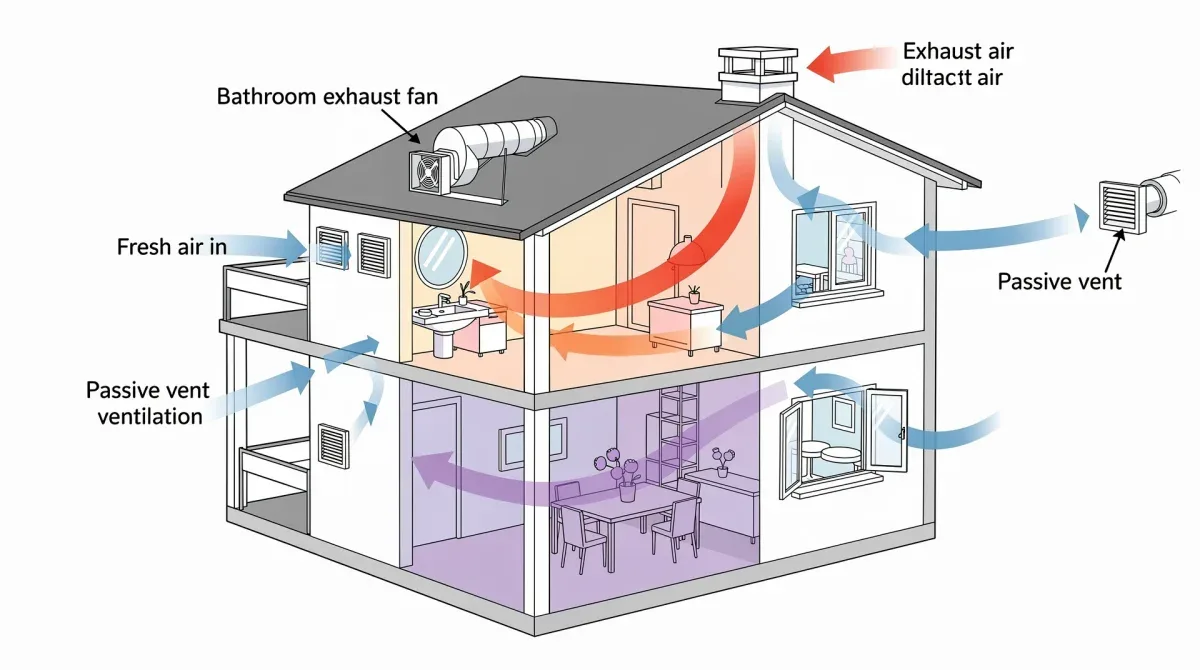
Kitchen range hoods and bathroom exhaust fans are prime examples of targeted exhaust systems. A powerful range hood can remove cooking fumes, grease particles, and combustion byproducts directly from the kitchen area. Similarly, bathroom fans combat moisture and associated mold spores, which contribute to airborne particulate matter, especially after hot showers.
Maximizing effectiveness of kitchen and bathroom exhaust fans
To ensure your exhaust fans are working optimally, consider the following:
- Proper sizing: Ensure your exhaust fan's CFM (cubic feet per minute) rating matches the size of your room or cooking area.
- Ducting: Verify that exhaust fans are properly ducted to the outside, not into an attic or wall cavity, which can create moisture and mold issues.
- Regular cleaning: Clean fan filters and grilles regularly to prevent blockages and maintain airflow efficiency.
- Consistent use: Turn on exhaust fans before starting a pollutant-generating activity and let them run for 15-20 minutes afterward to ensure complete removal.
Beyond standard kitchen and bathroom fans, consider local exhaust ventilation for other specific pollutant sources. For example, a dedicated fan in a laundry room can help remove lint and chemical fumes from detergents. Workshop areas where painting, sanding, or other dusty activities occur also benefit greatly from localized exhaust systems. These systems are designed to create a negative pressure zone around the source, drawing contaminated air directly out of the space.
The principle behind targeted exhaust ventilation is simple yet powerful: intercept pollutants at their point of origin. This proactive approach not only reduces the overall concentration of particulate matter in your home but also minimizes exposure to harmful substances. By integrating effective exhaust systems and using them consistently, homeowners can significantly enhance their indoor air quality and create a much healthier living environment. This strategy complements general ventilation by tackling specific, high-impact sources of pollution.
Strategy 3: mechanical ventilation with filtration for continuous air purification
Mechanical ventilation systems, such as exhaust-only, supply-only, balanced, and energy recovery ventilators (ERVs) or heat recovery ventilators (HRVs), offer a controlled and continuous way to introduce fresh air and remove stale air from your home. When combined with high-efficiency filtration, these systems become powerful tools for reducing indoor particulate matter by a significant margin. Unlike natural ventilation, mechanical systems operate independently of weather conditions, providing consistent air exchange.
The core benefit of mechanical ventilation is its ability to ensure a steady supply of filtered outdoor air while simultaneously expelling indoor air that may contain pollutants. This constant air turnover effectively dilutes and removes particulate matter, volatile organic compounds, and other airborne contaminants. The key to their effectiveness in reducing PM lies in the integration of robust air filtration.
Leveraging advanced filtration with mechanical systems
When choosing a mechanical ventilation system, prioritize those that can accommodate high-efficiency filters. The Minimum Efficiency Reporting Value (MERV) rating indicates a filter's ability to capture airborne particles. Higher MERV ratings mean better filtration, capturing smaller particles like fine dust, pollen, pet dander, and even some bacteria and viruses.
- MERV 8-10: Good for basic residential use, capturing most pollen, dust mites, and mold spores.
- MERV 11-13: Excellent for residential use, capturing pet dander, lead dust, humidifier dust, and some car emissions.
- MERV 14-16: Hospitals and superior residential use, capturing bacteria, droplet nuclei, and all smaller particles.
- HEPA filters: The highest standard, capturing 99.97% of particles 0.3 microns or larger, including smoke and viruses.
Energy recovery ventilators (ERVs) and heat recovery ventilators (HRVs) are particularly beneficial as they exchange indoor and outdoor air while recovering a significant portion of the energy used to heat or cool the indoor air. This makes them an energy-efficient choice for continuous ventilation, preventing excessive energy loss that might occur with simple exhaust or supply fans. They are especially useful in tightly sealed, energy-efficient homes where natural infiltration is minimal.
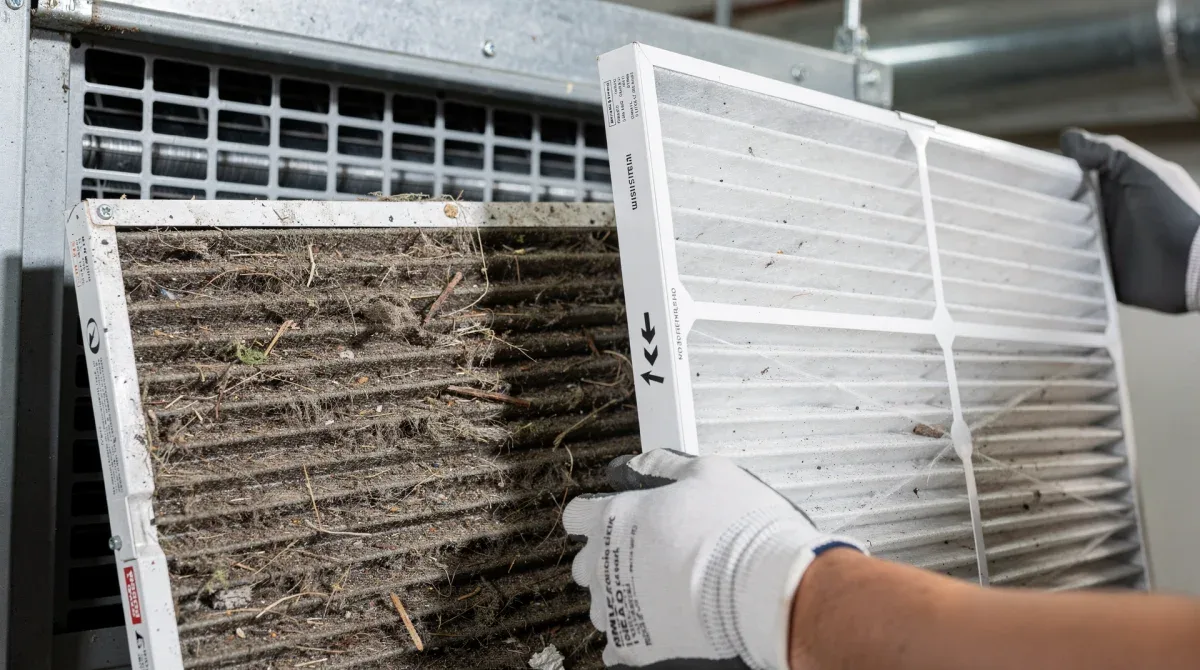
Regular maintenance, including timely filter replacement, is critical for the sustained performance of any mechanical ventilation system. Clogged filters reduce airflow and filtration efficiency, negating the system's benefits. By investing in a well-designed mechanical ventilation system with appropriate filtration, homeowners can achieve a superior level of indoor air quality, ensuring a continuous supply of clean, fresh air that significantly reduces particulate matter and protects health.
Combining strategies for maximum impact on air quality
While each ventilation strategy offers distinct benefits, the most effective approach to reducing indoor particulate matter by a significant margin often involves combining all three. A holistic strategy leverages the strengths of natural airflow, targeted pollutant removal, and continuous mechanical air exchange with filtration. This layered defense ensures that various sources of particulate matter are addressed comprehensively, leading to a much healthier indoor environment.
Think of it as creating a multi-faceted shield against indoor air pollution. Natural ventilation provides a baseline of fresh air, especially during favorable weather conditions. Targeted exhaust fans tackle specific, high-emission activities, preventing pollutants from spreading. Mechanical ventilation with advanced filtration then acts as a continuous background cleaner, consistently removing fine particles and ensuring a steady supply of purified air, regardless of external factors or internal activities.
Implementing a layered ventilation approach
To integrate these strategies effectively, consider the following:
- Daily natural ventilation: Open windows and doors for short periods daily to flush out stale air, especially in the mornings or evenings when outdoor air quality is generally better.
- Activated exhaust fans: Always use range hoods while cooking and bathroom fans during and after showers. Ensure these systems are adequately sized and properly vented.
- Continuous mechanical filtration: Operate your ERV/HRV or filtered HVAC system according to manufacturer recommendations, ensuring regular filter changes. Consider upgrading to higher MERV-rated filters or HEPA filters if your system can accommodate them.
- Air quality monitoring: Use an indoor air quality monitor to track particulate matter levels and adjust ventilation strategies as needed. This provides real-time feedback on the effectiveness of your efforts.
By consciously integrating these methods, homeowners can create a dynamic and responsive system for managing indoor air quality. For example, on a day with moderate outdoor air quality, you might rely more heavily on your mechanical system. On a pleasant day, opening windows for cross-ventilation can supplement or even temporarily replace mechanical ventilation, saving energy. This adaptability is key to maintaining consistently low levels of indoor particulate matter.
The synergy between natural, targeted, and mechanical ventilation strategies provides the most robust defense against indoor air pollution. It allows for flexibility, energy efficiency, and, most importantly, a significant reduction in airborne particulate matter, contributing to a healthier and more comfortable home environment for everyone.
Practical tips for maintaining optimal indoor air quality
Beyond implementing the three core ventilation strategies, several practical tips can further enhance your home's air quality and support the reduction of particulate matter. These everyday habits and maintenance routines play a crucial role in preventing pollution buildup and ensuring your ventilation efforts are as effective as possible. A proactive approach to indoor air quality involves both active pollutant removal and source reduction.
Maintaining optimal indoor air quality is an ongoing process, not a one-time fix. It requires consistent attention to cleaning, material choices, and monitoring. By integrating these simple yet impactful practices into your routine, you can create a continuously healthier living space, complementing your ventilation systems and maximizing their benefits.
Everyday habits for a cleaner air environment
Small changes in daily habits can have a big impact on indoor air quality:
- Regular cleaning: Dust and vacuum frequently using a vacuum cleaner with a HEPA filter to capture particulate matter rather than redistributing it.
- Source reduction: Limit the use of candles, incense, and fireplaces. Choose low-VOC (volatile organic compound) paints and cleaning products.
- Humidity control: Maintain indoor humidity levels between 30-50% to inhibit mold and dust mite growth, both of which contribute to particulate matter.
- Shoe-free home: Implement a shoe-free policy to prevent outdoor pollutants, pesticides, and dirt from being tracked inside.
- Houseplants: While not a primary air purifier, certain houseplants can contribute to air freshness and aesthetic appeal.
Consider the materials within your home. Furniture, flooring, and building materials can off-gas VOCs and release fine particles over time. Opt for natural materials, low-emission products, and avoid synthetic fragrances in air fresheners, which can introduce additional chemicals and particulate matter into the air. Regularly checking and sealing air leaks around windows and doors can also prevent unwanted outdoor pollutants from entering your home, making your ventilation efforts more efficient.
Furthermore, pay attention to potential hidden sources of pollution. Older homes might contain lead paint or asbestos, which can release harmful particles if disturbed. Radon gas, a naturally occurring radioactive gas, can also seep into homes and requires specific mitigation strategies. While these are not directly addressed by standard ventilation, being aware of them is part of a comprehensive indoor air quality plan.
By combining robust ventilation strategies with diligent maintenance and smart everyday habits, you can create a truly healthy and clean indoor environment. These practical steps ensure that your efforts to reduce particulate matter are sustained and provide lasting benefits for your well-being.
Future trends in home ventilation and air purification
The field of home ventilation and air purification is constantly evolving, driven by advancements in technology and a growing awareness of indoor air quality's importance. Future trends point towards more integrated, intelligent, and energy-efficient systems that offer superior control and performance. These innovations aim to make achieving clean air at home even more accessible and effective, further empowering homeowners to protect their health.
One significant trend is the rise of smart home integration. Ventilation systems are becoming increasingly connected, allowing for automated control based on real-time indoor and outdoor air quality data. This means systems can automatically adjust airflow, filtration levels, and operation times to optimize air quality without constant manual intervention, responding dynamically to changes in the environment or specific activities within the home.
Emerging technologies for enhanced air quality
Several exciting technologies are shaping the future of indoor air quality:
- AI-powered air monitoring: Advanced sensors combined with artificial intelligence can predict and respond to air quality issues before they become problematic, learning from household patterns.
- Advanced filtration materials: Research is ongoing into new filter materials that can capture even smaller particles, neutralize viruses, and break down VOCs more effectively and with less energy consumption.
- Personalized ventilation zones: Future systems may allow for zoned ventilation, providing specific airflow and filtration levels to individual rooms based on occupancy and activity.
- Biophilic design integration: Incorporating natural elements and principles of design that enhance human connection to nature, including optimized natural ventilation and plant-based air purification, is gaining traction.
Beyond technological advancements, there's a growing emphasis on holistic home design that prioritizes indoor air quality from the ground up. This includes using low-emission building materials, designing homes for optimal natural airflow, and integrating mechanical ventilation systems as a standard feature rather than an add-on. The goal is to create homes that are inherently healthy and contribute positively to the occupants' well-being.
The convergence of smart technology, advanced materials, and sustainable design principles promises a future where maintaining exceptional indoor air quality is seamless, energy-efficient, and highly effective. As these trends mature, homeowners will have even more powerful tools at their disposal to ensure their living spaces are free from harmful particulate matter and other pollutants, truly fostering healthy living environments for years to come.
| Ventilation Strategy | Brief Description |
|---|---|
| Natural Ventilation | Utilizes wind and temperature differences to exchange indoor and outdoor air through open windows and doors. |
| Targeted Exhaust | Removes pollutants at their source (e.g., kitchen, bathroom) using dedicated exhaust fans vented outdoors. |
| Mechanical with Filtration | Uses systems like ERVs/HRVs to continuously introduce filtered fresh air and expel stale air. |
| Combined Approach | Integrates all three strategies for a comprehensive and highly effective reduction of indoor particulate matter. |
Frequently asked questions about clean air at home
How often should I open my windows for natural ventilation?▼Aim for 5-10 minutes a few times a day, especially in the morning or evening when outdoor air quality is good. Cross-ventilation (opening windows on opposite sides) is most effective. Adjust frequency based on outdoor conditions like pollen count or pollution levels, opting for mechanical systems when outdoor air is poor.
What MERV rating is best for reducing particulate matter?▼For most homes, a MERV 11-13 filter is ideal, balancing excellent particulate capture with maintaining good airflow for your HVAC system. Filters with higher MERV ratings, like MERV 14-16 or HEPA, offer superior filtration but might require system upgrades to handle increased airflow resistance.
Can houseplants significantly improve indoor air quality?▼While houseplants can contribute to a healthier environment and remove some VOCs, their impact on significantly reducing particulate matter is minimal compared to dedicated ventilation and filtration systems. They offer aesthetic and psychological benefits but shouldn't be relied upon as primary air purifiers.
How do I know if my home's air quality is poor?▼Common signs include persistent odors, excessive dust, visible mold, or health symptoms like allergies, asthma flare-ups, or frequent respiratory issues. The most accurate way to assess indoor air quality is by using an indoor air quality monitor that measures particulate matter, VOCs, and other common pollutants.
Are air purifiers a substitute for ventilation?▼No, air purifiers and ventilation serve different but complementary roles. Air purifiers filter existing indoor air, removing pollutants. Ventilation, however, introduces fresh outdoor air and expels stale indoor air. For optimal clean air at home, a combination of effective ventilation and high-quality air purification is recommended.
Conclusion
Achieving truly clean air at home is an attainable goal through the strategic implementation of various ventilation methods. By understanding the impact of indoor particulate matter and adopting a multi-pronged approach that combines natural ventilation, targeted exhaust systems, and advanced mechanical ventilation with high-efficiency filtration, homeowners can dramatically reduce airborne pollutants. These strategies, when consistently applied and supported by smart daily habits, empower you to create a healthier, more comfortable, and safer living environment for everyone under your roof. Investing in clean air is an investment in long-term well-being, ensuring that your home remains a sanctuary from the often-unseen threats of indoor air pollution.
