Optical Heart Rate Monitors: 99% Accuracy Against Chest Straps
The latest optical heart rate monitors now offer an impressive 99% accuracy when compared to traditional chest strap devices, marking a significant advancement in wearable fitness technology for precise physiological tracking during workouts.
Have you ever wondered if your wrist-worn fitness tracker is truly giving you accurate heart rate data? The good news is, a significant Fitness Tech Update: New Generation of Optical Heart Rate Monitors Proves 99% Accurate Against Traditional Chest Straps, revolutionizing how we approach personal fitness and health monitoring. This breakthrough means convenience no longer has to come at the expense of precision, offering athletes and casual exercisers alike a reliable tool for optimizing their training and understanding their bodies better.
The evolution of heart rate monitoring technology
Heart rate monitoring has come a long way since its inception, moving from bulky, inconvenient devices to sleek, integrated wearables. Initially, chest strap monitors were the gold standard, offering unparalleled accuracy by directly measuring electrical signals from the heart. However, their comfort and practicality often left much to be desired, especially for prolonged use or certain types of activities. This paved the way for the development of optical heart rate monitors, which promised greater comfort and ease of use but initially struggled with accuracy, particularly during intense movements or in varying skin tones.
The journey from rudimentary optical sensors to today's highly accurate devices is a testament to relentless innovation in biomedical engineering and signal processing. Early optical monitors often suffered from motion artifacts and environmental interference, leading to inconsistent readings. Researchers and developers focused on refining algorithms, improving sensor design, and integrating advanced filtering techniques to overcome these challenges. The goal was always to match the precision of chest straps without compromising on wearability.
Early challenges and breakthroughs
The initial challenge for optical heart rate monitors was primarily signal noise. Any movement, sweat, or even ambient light could interfere with the photoplethysmography (PPG) signal, which measures changes in blood volume. Over time, engineers developed multi-LED systems, improved sensor placement, and created sophisticated algorithms capable of distinguishing true heart rate signals from noise. These advancements were crucial in bridging the accuracy gap.
- Improved sensor placement on the wrist or arm.
- Development of multi-wavelength LED technology.
- Sophisticated motion artifact rejection algorithms.
- Enhanced filtering techniques for clearer signal processing.
These breakthroughs were not isolated incidents but rather a cumulative effort across numerous research institutions and tech companies. The continuous iteration, feedback from athletes, and rigorous testing environments pushed the technology forward. The focus shifted from simply detecting a pulse to accurately measuring heart rate variability and providing real-time, reliable data under diverse conditions. This foundational work laid the groundwork for the impressive accuracy we see today.
Ultimately, the evolution reflects a deep understanding of human physiology combined with cutting-edge electronics. The ability to miniaturize powerful sensors and processors, coupled with advancements in battery life, has made these devices practical for daily use. This ongoing development ensures that heart rate monitoring continues to become more accessible and reliable for everyone, from elite athletes to individuals simply looking to stay active.
How optical heart rate monitors achieve 99% accuracy
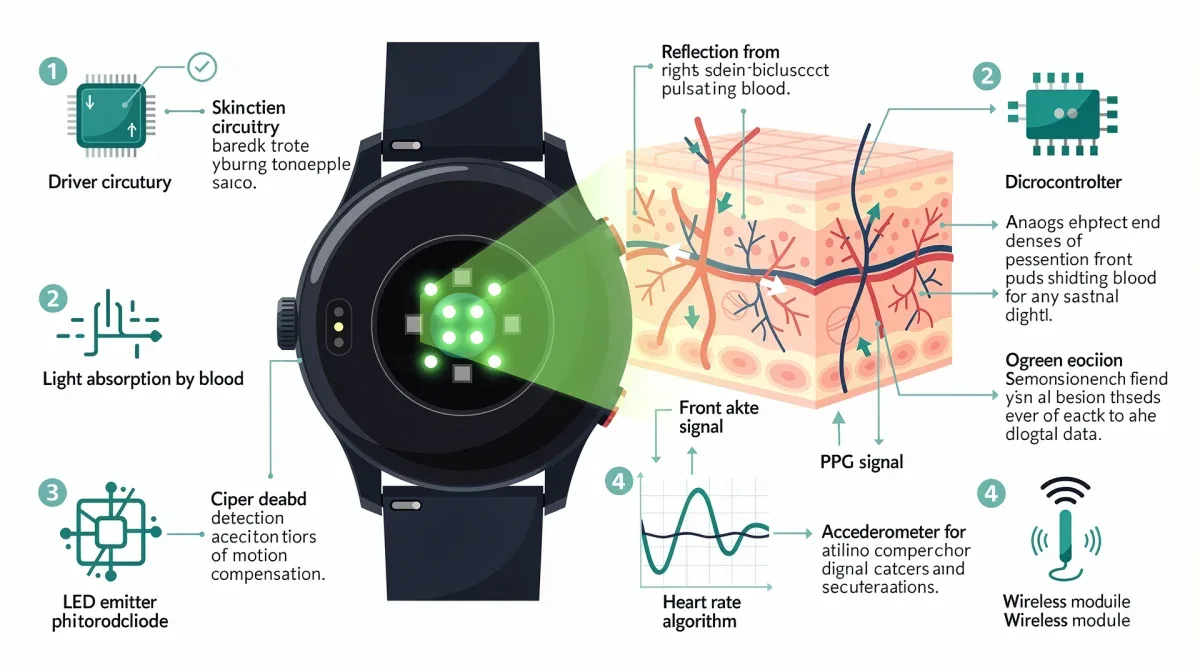
The leap to 99% accuracy in optical heart rate monitors is not a single innovation but a confluence of advanced technologies working in harmony. At its core, optical heart rate monitoring relies on photoplethysmography (PPG), a technique that uses light to detect changes in blood volume under the skin. Green LED lights are typically used because hemoglobin in the blood absorbs green light, making it easier to detect blood flow changes during the heart's pumping cycle.
Modern devices employ multiple LEDs and photodiodes to capture a broader and more robust signal. This redundancy helps to minimize errors caused by sensor movement or variations in skin perfusion. The data collected by these sensors is then fed into highly sophisticated algorithms, which are the true brains behind the operation. These algorithms are designed to filter out noise, compensate for motion, and interpret the subtle changes in light absorption to derive an accurate heart rate.

Advanced signal processing and machine learning
The key to the new generation's accuracy lies in its advanced signal processing capabilities and the integration of machine learning. Instead of relying on simple thresholding, these algorithms can learn and adapt to individual physiological differences and exercise intensities. They can identify patterns that correspond to actual heartbeats amidst a sea of noise generated by movement, sweat, and even external light.
- Multi-sensor data fusion for comprehensive readings.
- Machine learning models trained on vast datasets of physiological data.
- Adaptive filtering that adjusts to different activities and users.
- Real-time artifact detection and correction.
Furthermore, many contemporary optical heart rate monitors incorporate accelerometers and gyroscopes. These additional sensors provide contextual data about the user's movement, allowing the heart rate algorithm to differentiate between actual heart rate fluctuations and movement-induced noise. For example, if the accelerometer detects a sudden arm swing, the algorithm can intelligently filter out the corresponding noise from the PPG signal.
This holistic approach, combining superior hardware with intelligent software, is what allows these devices to rival the accuracy of traditional chest straps. The continuous refinement of these algorithms, often through over-the-air updates, ensures that the accuracy of these devices only improves over time, making them increasingly reliable tools for serious athletes and everyday users alike.
Comparing optical monitors to traditional chest straps
For years, the chest strap heart rate monitor was considered the undisputed champion of accuracy. It works by detecting the electrical impulses generated by the heart, a direct and precise measurement. This method is highly reliable, especially during activities where arm movement might interfere with optical sensors. However, chest straps come with their own set of drawbacks, primarily related to comfort and convenience. Many users find them restrictive, uncomfortable, or prone to slipping, especially during high-intensity workouts or prolonged wear.
The new generation of optical heart rate monitors now challenges this long-held supremacy. Achieving 99% accuracy means they are performing almost identically to chest straps in controlled environments and increasingly well in dynamic, real-world scenarios. This level of precision is revolutionary because it offers the best of both worlds: the accuracy traditionally associated with chest straps combined with the comfort and convenience of a wrist-worn device.
Advantages of optical monitors
The primary advantages of optical heart rate monitors are clear. They are significantly more comfortable, less intrusive, and can be worn continuously without discomfort. This makes them ideal for 24/7 heart rate tracking, sleep monitoring, and everyday activity assessment, aspects where chest straps are impractical. Furthermore, they are often integrated into smartwatches and fitness trackers, providing a consolidated device for various health and fitness metrics.
- Superior comfort and less intrusive design.
- Suitable for continuous 24/7 wear and sleep tracking.
- Integrated into multi-functional smart devices.
- No need for skin contact gel or re-adjustments during exercise.

While traditional chest straps still hold a niche for specific applications requiring absolute, instantaneous precision, such as professional sports or medical-grade monitoring, the gap has narrowed considerably for general fitness and health tracking. The convenience factor of optical monitors often outweighs the marginal difference in accuracy for the vast majority of users, making them the preferred choice for a broader audience.
The debate between the two technologies is no longer about accuracy versus convenience but rather about specific use cases. For most fitness enthusiasts, the new optical monitors provide more than enough precision to guide training, track progress, and monitor health without the drawbacks of a chest strap. This shift empowers more people to engage with their physiological data regularly and comfortably.
Impact on fitness tracking and personal health
The enhanced accuracy of optical heart rate monitors is profoundly impacting the landscape of fitness tracking and personal health management. With reliable heart rate data now readily available from a comfortable wrist device, users can gain deeper insights into their workouts, recovery, and overall cardiovascular health. This precision allows for more effective training zones, better understanding of calorie expenditure, and improved monitoring of stress and sleep patterns, all crucial components of a holistic health approach.
For athletes, precise heart rate data means optimizing training intensity and avoiding overtraining. By accurately tracking their heart rate zones, they can ensure they are working at the right level for endurance, fat burning, or peak performance. This leads to more efficient workouts and better results. For the general public, this means a more accessible entry point into understanding their body's responses to activity, encouraging healthier habits.
New possibilities for personalized training
The integration of highly accurate optical heart rate data into sophisticated fitness apps and platforms opens up new possibilities for personalized training. These platforms can now leverage precise real-time data to offer dynamic workout suggestions, adjust training plans based on recovery status, and provide actionable feedback that is tailored to individual physiological responses.
- Dynamic adjustment of training plans based on real-time data.
- Improved recovery tracking and readiness assessment.
- More accurate calorie burn estimations.
- Enhanced insights into sleep quality and stress levels.
Beyond fitness, accurate heart rate monitoring plays a vital role in personal health. Consistent tracking can help identify unusual heart rate patterns that might warrant medical attention, serving as an early warning system for potential health issues. Furthermore, for individuals managing chronic conditions, reliable heart rate data provides valuable information for their healthcare providers, allowing for more informed treatment decisions.
The shift towards comfortable, accurate, and continuous heart rate monitoring empowers individuals to take a more proactive role in their health journey. It transforms raw data into meaningful insights, fostering a greater connection between individuals and their physiological well-being. This democratization of high-quality health data is a significant step forward in preventative care and personalized wellness.
Future trends and innovations in wearable heart rate tech
The current advancements in optical heart rate monitors are just the beginning. The future of wearable heart rate technology promises even greater integration, enhanced accuracy, and the ability to monitor a wider array of physiological parameters. Research and development are continually pushing the boundaries, exploring new sensor types, more sophisticated algorithms, and seamless integration with other health monitoring systems. We can anticipate devices that not only measure heart rate with extreme precision but also offer predictive analytics based on long-term data trends.
One significant trend is the move towards multi-modal sensing, where optical heart rate data is combined with other biometric inputs. This could include continuous blood pressure monitoring, blood oxygen saturation (SpO2), skin temperature, and even advanced glucose monitoring. By integrating these different data streams, future wearables will provide a more comprehensive picture of an individual's health, moving beyond just heart rate to a more holistic physiological profile.
Beyond the wrist: new sensor locations
While the wrist remains a popular and convenient location for optical heart rate monitors, innovations are exploring other body parts for even greater accuracy and diverse applications. Ear-based sensors, for instance, can offer a more stable signal, less prone to motion artifacts, and potentially more accurate core body temperature readings. Smart clothing with embedded sensors is also gaining traction, offering discreet and continuous monitoring without the need for a separate device.
- Integration of new biometric sensors (blood pressure, glucose).
- Development of predictive health analytics.
- Exploration of alternative sensor locations beyond the wrist (ear, clothing).
- Enhanced battery life and miniaturization of components.
Furthermore, the role of artificial intelligence and machine learning will continue to expand. Algorithms will become even more adept at understanding individual physiology, adapting to unique body compositions, activity types, and environmental factors. This will lead to truly personalized insights and recommendations that go far beyond generic fitness advice. The goal is to create a seamless, intelligent health companion that anticipates needs and offers proactive guidance.
The continuous drive towards miniaturization and energy efficiency will also lead to smaller, lighter, and longer-lasting devices. This will make wearables even less noticeable and more comfortable for continuous wear, further blurring the lines between technology and everyday life. The future of wearable heart rate tech is bright, promising a world where personal health monitoring is not just accurate but also intuitive, comprehensive, and deeply integrated into our daily routines.
Choosing the right optical heart rate monitor for your needs
With the impressive advancements in optical heart rate monitors, choosing the right device can seem daunting given the array of options available. The best choice ultimately depends on your specific needs, activities, and budget. For casual users looking for general fitness tracking and daily health insights, many popular smartwatches and fitness bands offer excellent optical heart rate monitoring capabilities, often integrated with other useful features like sleep tracking and activity logging.
For serious athletes or those engaging in high-intensity interval training (HIIT), factors like sensor stability during vigorous movement and the sophistication of motion artifact rejection algorithms become paramount. Some dedicated sports watches offer enhanced optical sensors and more robust software to handle extreme conditions. It's also important to consider compatibility with your existing fitness ecosystem, such as specific training apps or other smart devices you use.
Key features to consider
When evaluating optical heart rate monitors, several key features should guide your decision. Accuracy, while now generally high, can still vary slightly between brands and models, so checking independent reviews and comparisons is advisable. Comfort is crucial for continuous wear, so consider the band material and overall design. Battery life is another practical consideration, especially if you plan on long workouts or multi-day tracking without frequent charging.
- Accuracy: Look for devices with a proven track record in independent tests.
- Comfort and Fit: Ensure the device feels good on your wrist or chosen body part.
- Battery Life: Match it to your usage patterns, from daily wear to multi-day adventures.
- Connectivity: Check for compatibility with smartphones, fitness apps, and other sensors (e.g., ANT+, Bluetooth).
- Additional Features: Consider GPS, SpO2, sleep tracking, and smart notifications if they are important to you.
Ultimately, the goal is to find a device that provides reliable data without compromising on your comfort or lifestyle. Don't be swayed solely by marketing claims; instead, prioritize devices that offer transparency about their accuracy and have strong user feedback. Trying on different models, if possible, can also help ensure a good fit and feel, which is essential for consistent and accurate readings. Investing in the right optical heart rate monitor means investing in more informed and effective fitness and health management.
Maintaining accuracy and getting the most from your device
Even with the advanced technology of the new generation of optical heart rate monitors, proper usage and maintenance are crucial to ensure you continue to receive accurate readings. The placement of the device on your wrist or arm plays a significant role. It should be snug enough to prevent movement during activity but not so tight as to restrict blood flow. Typically, wearing it slightly higher on the arm, away from the wrist bone, can improve signal quality.
Skin contact is vital for the optical sensors to work effectively. Ensure the sensor is clean and free from dirt, sweat, or lotion build-up, which can obstruct the light signals. Regularly cleaning the sensor area with a soft, damp cloth is a simple yet effective practice. During strenuous workouts, sweat can sometimes interfere; wiping the area dry periodically can help maintain consistent readings.
Tips for optimal performance
To maximize the accuracy and lifespan of your optical heart rate monitor, consider these practical tips. Keeping your device's firmware updated is often overlooked but critical, as manufacturers frequently release updates that improve algorithms and sensor performance. Also, be aware of environmental factors; extreme cold can constrict blood vessels and affect readings, while very bright sunlight can sometimes interfere with the optical signal.
- Ensure a snug but comfortable fit, typically above the wrist bone.
- Keep the sensor clean and free from debris, sweat, or lotions.
- Regularly update your device's firmware for performance enhancements.
- Be mindful of environmental factors like extreme temperatures.
- Allow your body to warm up before intense activity for more stable readings.
Understanding the limitations of any technology is also part of getting the most out of it. While 99% accurate, certain activities like weightlifting, where wrist flexion is common, or swimming, due to water interference, can sometimes present challenges for wrist-based optical sensors. For these specific activities, a chest strap might still offer a slight edge in instantaneous accuracy. However, for the vast majority of cardiovascular exercises, the new optical monitors are remarkably reliable.
By following these guidelines, you can ensure that your advanced optical heart rate monitor consistently provides the precise data you need to make informed decisions about your fitness and health. This proactive approach to device care will help you unlock the full potential of this revolutionary technology, supporting your journey towards a more active and balanced life.
| Key Feature | Description |
|---|---|
| Accuracy Boost | New optical monitors achieve 99% accuracy against traditional chest straps, revolutionizing reliable heart rate data. |
| Technological Advancements | Utilizes multi-LED systems, advanced signal processing, and machine learning to filter noise and enhance precision. |
| Comfort & Convenience | Offers superior comfort and ease of use compared to chest straps, ideal for continuous wear and diverse activities. |
| Impact on Fitness | Enables more personalized training, better recovery tracking, and accessible health insights for all users. |
Frequently asked questions about optical heart rate monitors
How do optical heart rate monitors work?▼Optical heart rate monitors use photoplethysmography (PPG) technology. They emit green LED light into the skin, which is absorbed by the hemoglobin in your blood. As your heart beats, blood flow changes, causing variations in light absorption. A photodiode detects these changes, and sophisticated algorithms translate them into a precise heart rate reading.
Are optical heart rate monitors accurate enough for serious athletes?▼Yes, the new generation of optical heart rate monitors has achieved up to 99% accuracy compared to traditional chest straps, making them highly reliable for most serious athletes. While chest straps might still offer a slight edge in very specific, high-intensity, or rapid-movement scenarios, optical monitors provide sufficient precision for effective training and performance tracking.
What factors can affect the accuracy of an optical heart rate monitor?▼Several factors can influence accuracy, including device fit (too loose or too tight), skin tone, excessive movement during exercise, sweat, and tattoo placement over the sensor. Keeping the sensor clean, ensuring a snug fit, and updating firmware can significantly mitigate these issues and improve overall reliability of the readings.
Can optical heart rate monitors track heart rate variability (HRV)?▼Many advanced optical heart rate monitors are now capable of tracking heart rate variability (HRV) with good accuracy. HRV is a valuable metric for assessing recovery, stress levels, and overall autonomic nervous system health. The enhanced precision of these new devices allows for more reliable HRV data collection, contributing to a more comprehensive health picture.
Are optical monitors safe to wear continuously?▼Yes, optical heart rate monitors are generally safe for continuous wear. The LED lights used are low-power and pose no known health risks. Their comfortable, non-invasive design makes them ideal for 24/7 tracking, including sleep monitoring, without causing irritation or discomfort, thus promoting consistent health data collection.
Conclusion
The latest advancements in optical heart rate monitors represent a paradigm shift in fitness technology, offering unprecedented 99% accuracy against traditional chest straps. This evolution not only provides superior comfort and convenience but also empowers individuals with reliable, real-time physiological data to optimize their training, enhance recovery, and proactively manage their overall health. As these devices continue to integrate advanced algorithms and multi-modal sensing, the future promises even more comprehensive and personalized health insights, making high-quality heart rate monitoring accessible and indispensable for everyone on their wellness journey.
